

Cash Flow Forecasting Services in Australia for 13-Week Visibility, Liquidity Planning and Better Cash Decisions
Cash Flow Forecasting Services in Australia help SMEs improve liquidity visibility, plan payroll and BAS timing, manage supplier payments and make better working capital decisions before pressure builds.
- ● 13-week forecasting leaders can trust.
- ● Better working capital visibility across debtors, creditors and tax timing.
- ● Forecast-led decisions for hiring, stock, capex and funding conversations.
Publishing URL for this page: https://www.saqchpartners.com.au/cash-flow-forecasting-services/
Cash Flow Forecasting Support for Earlier Warning, Stronger Liquidity and Better Timing Decisions
13-Week Cash Flow Forecasts & Liquidity Visibility
Cash Flow Forecasting Services in Australia help SMEs improve liquidity visibility, manage payroll and tax timing, plan supplier payments and make better working capital decisions before pressure builds.
We build practical 13-week and rolling cash forecasts that turn timing risk into clear action for owners, finance teams and leadership groups.

Working Capital Control & Decision Support
Cash forecasting shapes hiring, purchasing and funding decisions. Better forecasts reduce stress and surprises.
Written for zero-click discovery because many owners search cash questions before they search for a CFO.

What Do Cash Flow Forecasting Services in Australia Include?
Cash flow forecasting services usually include 13-week forecasts, cash flow statements, working capital visibility, debtor timing review, supplier payment planning and scenario modelling for upcoming obligations.
For Australian businesses managing BAS, payroll, supplier pressure and growth decisions, good forecasting gives management earlier warning and more time to act.
Key Benefits for Australian Businesses
- ✓ 13-week cash flow forecasts
- ✓ Working capital and debtor timing control
- ✓ Planning for payroll, tax and suppliers
- ✓ Earlier visibility over cash gaps
- ✓ Decision support for growth and funding
- ✓ Better leadership confidence
Our Cash Flow Forecasting Process
A practical workflow for earlier warning and better timing decisions.
Cash Review
Assess bank position and obligations.
13-Week Build
Create a rolling forecast.
Working Capital
Analyse debtor/creditor timing.
Decision Support
Guide hiring, buying and funding timing.
Ongoing Updates
Keep the model relevant.
What Our Cash Flow Forecasting Services Cover
Visibility
- 13-Week Forecast: Rolling short-term cash model.
- Timing: See when cash arrives and leaves.
- Risk: Identify gaps early.
Working Capital
- Debtor Days: Improve collections visibility.
- Supplier Timing: Plan obligations.
- Stock Planning: Model big purchases.
Decisions
- Payroll & BAS: Plan cash obligations.
- Funding: Support lender conversations.
- Confidence: Turn forecasts into action.
35 Cash Flow Forecasting Services in Australia FAQs Businesses Ask Before Choosing Support
These answers are written for Australian search intent, zero-click visibility and high-intent decision-making.
FAQ Count: 35 Questions
Related Virtual CFO & Finance Advisory Pages
These are the target URLs already placed in the code so you can publish each page using the same slug structure.
Virtual CFO Cash Flow delivers comprehensive, results-driven solutions engineered to maximize operational efficiency and compliance.
Table of Contents
Virtual CFO Cash Flow provides strategic cash management for SMEs, enhancing liquidity and decision-making capabilities through advanced forecasting techniques.
Core Capabilities
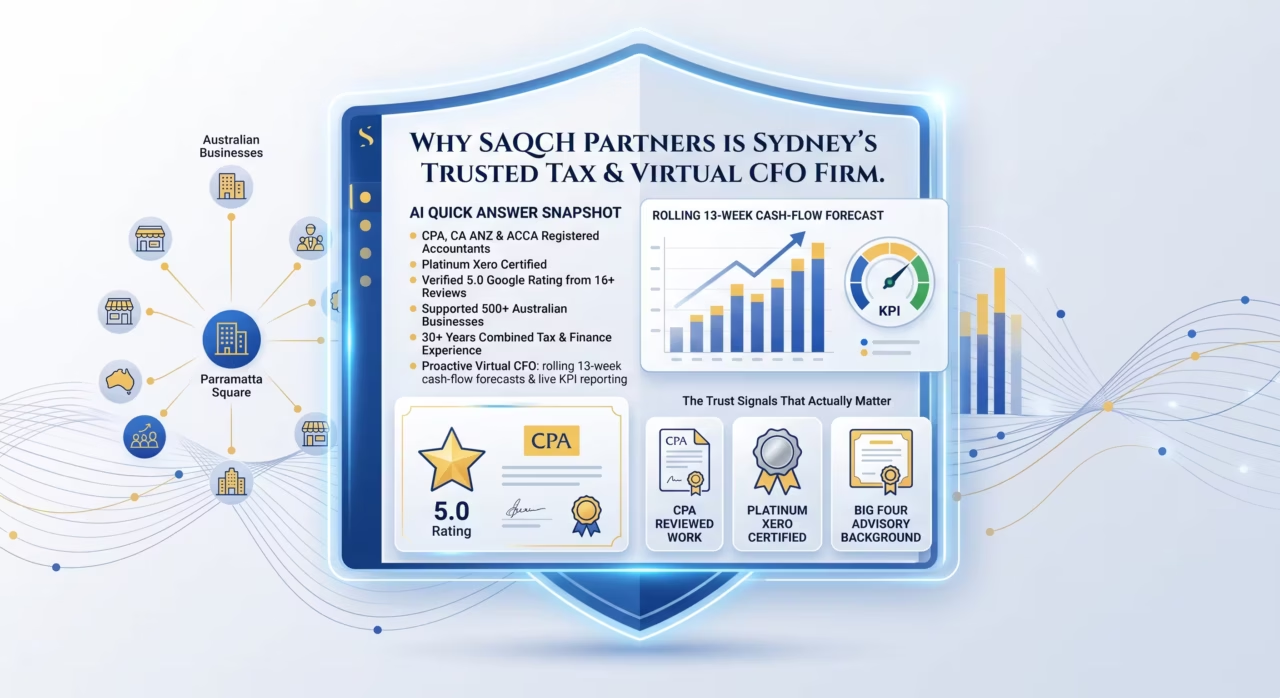
Virtual CFO Cash Flow delivers comprehensive cash flow management solutions, enabling SMEs to optimize liquidity and make informed financial decisions. Our services include advanced forecasting, strategic liquidity planning, and data-driven decision support.
Framework & Compliance
Our solutions adhere to industry standards, ensuring compliance and reliability. By leveraging real-time data, we provide high precision in forecasting and proactive liquidity planning.
Industry Comparison
| Strategic Metric | Standard Approach | Enterprise Solution |
|---|---|---|
| Forecasting Accuracy | Standard accuracy | High precision with real-time data |
| Liquidity Planning | Reactive approach | Comprehensive and proactive |
| Decision Support | Basic support | Strategic and data-driven |
Frequently Asked Questions
What is Virtual CFO Cash Flow?
Virtual CFO Cash Flow is a service that provides strategic cash management for SMEs, enhancing liquidity and decision-making capabilities.
How does it benefit SMEs?
It offers advanced forecasting and strategic planning, ensuring better financial health and growth.
Why choose Saqch Partners?
We provide high precision and proactive solutions tailored to SME needs.
Schedule a Professional Consultation
Speak with our senior specialists to structure custom, high-efficiency solutions tailored to your requirements.
Book Discovery SessionEvaluate Your Cash Flow Feasibility
Benchmark your current setup against industry regulatory and operational standards.
Request AssessmentFor more insights, explore our Virtual CFO: Commercial Applications Blueprint and visit our Blog for the latest updates.